

Empty Nest Dreams on Hold: How Adult Kids at Home Quietly Stress Your Marriage …And Gentle Steps to Reconnect
Summary
Adult children staying home longer isn’t a sign you’ve failed, it’s largely economic. According to the Australian Institute of Family Studies, 51% of men and 43% of women aged 20, 24 were living with parents in 2021, with rates rising post-COVID. That shift delays the “empty nest” stage many couples in their 50s expected, and it quietly triggers resentment, pursue-withdraw conflict cycles (as identified by The Gottman Institute), and emotional drift. The stress is normal. And with clear boundaries and structured conversations, it’s fixable.
You’re in your 50s.
Mortgage nearly done. Caravan brochures bookmarked. Maybe even talking about cutting back work.
But the spare room’s still full.
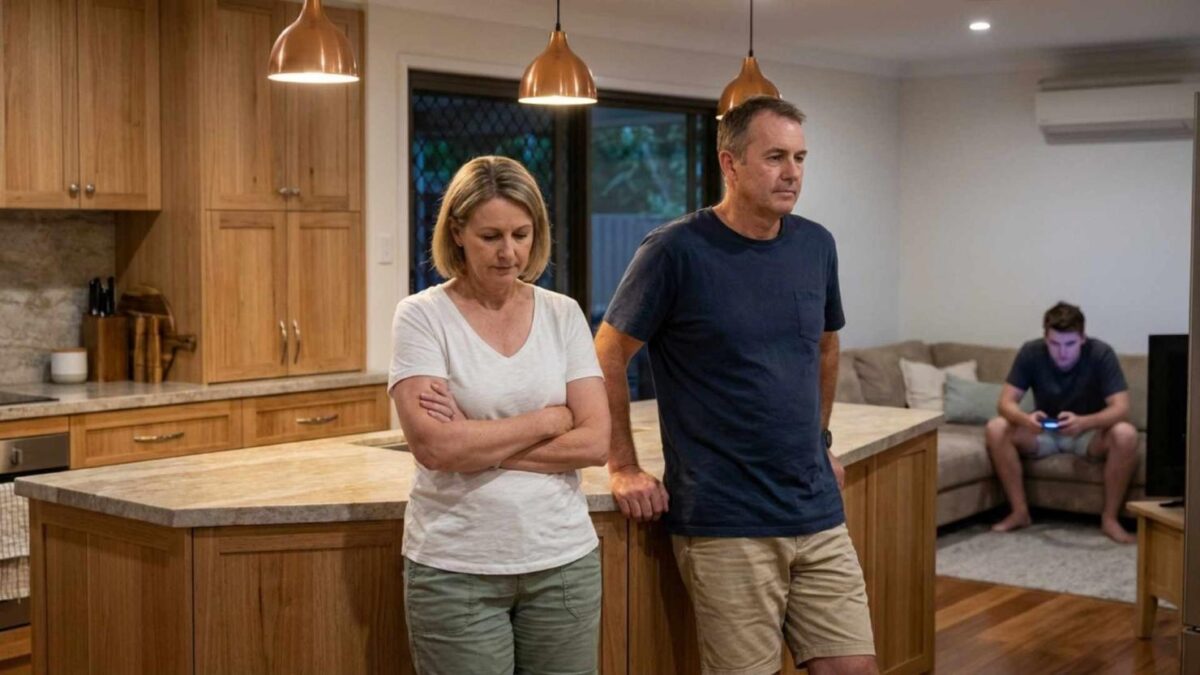
The ute in the driveway belongs to your 24-year-old. The dishes aren’t yours. And the conversation you and your partner keep having, about rent, chores, job applications, “how long is this going to last?”, never really ends.
It might feel petty. It’s not.
Across Australia, living at home into the early twenties is now common. The Australian Institute of Family Studies reports 72% of 19-year-olds and roughly half of people in their early twenties live with parents, a noticeable jump over the past decade. Housing costs, insecure work, COVID disruptions. It’s structural.
But structural pressure still lands in your lounge room.
And in your marriage.
The Data Behind the Delayed Empty Nest
This isn’t just “our kids are soft.”
Family households, including those with adult children, are projected to remain the majority of Australian households for decades. The Australian Bureau of Statistics household projections show children (of any age) continuing to form a large share of family homes well into the 2040s.
Translation?
The traditional timeline, raise kids, launch them by 21, rediscover each other, isn’t as predictable anymore.
And that shift hits couples aged 45, 65 hardest.
You planned for freedom.
You got extended parenting.
How It Creeps In: Resentment + Drift
Here’s what couples often say in session:
“We’re not fighting about big things. We’re just… irritated all the time.”
That irritation isn’t random.
Research from The Gottman Institute shows that when everyday stress increases, couples miss each other’s bids for connection. Small attempts, a joke, a comment, a touch, go unnoticed. Not maliciously. Just because the house feels chaotic.
Adult kids home can mean:
- No privacy.
- Different standards about chores or hygiene.
- Financial pressure.
- Disagreement about how much to “push” them.
- Retirement timelines quietly shifting.
And slowly, you stop feeling like partners.
You feel like co-managers of a complicated share house.
The Pattern: Pursue + Withdraw
This one shows up a lot.
One partner says:
“Enough. They need to pay rent. Apply for jobs. Contribute properly.”
The other says:
“They’re struggling. Don’t push them. It’s hard out there.”
The more one pushes, the more the other softens.
The more one softens, the more the other escalates.
That’s the pursue, withdraw cycle, a well-documented marital conflict pattern in Gottman research. It’s not about being right. It’s about safety.
The pursuer fears:
“We’re being taken advantage of. Our future’s slipping.”
The withdrawer fears:
“We’re abandoning our child. We’ll damage the relationship.”
Both fears make sense.
But left unnamed, the cycle breeds resentment.
When the Empty Nest Doesn’t Arrive the Way You Expected
You always assumed that once the youngest finished their apprenticeship, the house would finally feel like yours again.
Maybe he’s a tradie. Maybe she works part-time in health. It doesn’t really matter.
Life happened. Work slowed. Plans shifted.
Now two years have passed.
- The laundry never seems done.
- One of you feels stuck between partner and child.
- Weekend getaways have quietly disappeared.
- Retirement conversations trail off into silence.
No one wants to “kick them out.”
But no one feels close anymore either.
That’s the quiet cost no one talks about.
Self-Check: Is This Hitting Your Marriage?
Ask yourselves:
- Do we argue about our adult child more than about anything else?
- Have we stopped planning couple time because “the house is full”?
- Does one of us feel like the “bad cop”?
- Are we delaying financial decisions because of them?
- Have we started thinking, “When they finally leave… maybe we won’t make it”?
If you nodded at two or more, it’s not a small stressor.
It’s a pattern – and that is actually the good news.
Because patterns can be shifted.
Boundary Setting Without Ultimatums
Here’s the part most couples fear.
Boundaries don’t mean rejection.
They mean clarity.
A practical boundary blueprint often includes:
1. Contribution Clarity
Rent or board doesn’t have to be market rate, but symbolic contribution matters. It shifts the dynamic from child to emerging adult.
2. Defined Responsibilities
Chores, shared spaces, expectations around guests. Written down. Not implied.
3. Timeline Conversations
Not a threat. A plan. “Let’s review in 6 months.”
4. Couple-First Time
Protected space. Even if that means a locked bedroom door and takeaway once a week.
This isn’t about forcing independence.
It’s about modelling it.
“Is It Normal to Feel This Angry?”
Yes. Studies have linked adult children returning home with spikes in parental stress and even depressive symptoms, particularly when the young adult is unemployed or directionless. That doesn’t make you selfish. It makes you human.
What matters is whether that stress turns into hostility between you.
Because once the conflict becomes about each other, not the situation, the drift accelerates.
Does Couples Counselling Help With This?
Often, yes. Not because counselling “fixes” your kids. But because it:
- Maps the pursue, withdraw cycle clearly.
- Separates economic reality from emotional reaction.
- Helps you align as a team before you talk to your adult child.
- Rebuilds small daily connection rituals.
- Clarifies what support versus enabling actually looks like.
At One Team Counselling & Coaching in Springfield, first sessions for this situation usually focus on:
- Naming the cycle (no blame).
- Identifying each partner’s fear underneath the argument.
- Creating one agreed boundary conversation to try at home.
- Restoring one simple weekly “us” ritual.
No guarantees. Just structure. Clarity. And reduced tension.
Why Some Couples Struggle After the Kids Finally Leave
There’s another quiet truth.
Some couples survive the child-raising years by focusing outward.
When the house finally empties, they realise they’ve grown apart.
Adult children staying longer doesn’t cause divorce on its own. But unresolved resentment can make the post-parenting transition rougher than expected.
Reconnecting now matters.
Not “when they leave.”
Now.
The Ipswich & Springfield Reality
Housing pressure in growth corridors like Springfield and Ipswich makes independence harder for young adults. Rent consumes a significant portion of income. Deposits feel impossible.
Your child’s delay isn’t necessarily laziness.
But your marriage doesn’t need to be collateral damage.
You can support them and protect your partnership at the same time.
Reclaiming “Us” While the House Is Still Full
Start small.
- One weekly check-in that isn’t about the kids.
- One boundary you both agree on.
- One appreciation spoken out loud daily.
- One protected couple activity each fortnight.
It sounds simple.
It’s powerful.
Because what erodes connection isn’t catastrophe.
It’s unattended drift.
If Resentment Is Building…
You’re not bad parents.
You’re navigating a new economic era without a cultural script.
If conversations feel circular or tense, a structured couples session can help you map the pattern and realign, without ultimatums, and without framing your child as the villain.
In-person sessions are available in Springfield, near Ipswich, and online across Australia.
You can book when you’re ready.
Or just sit with this for a bit.
Either way, the stress you’re feeling is understandable.
And your marriage is worth protecting.

In this article